

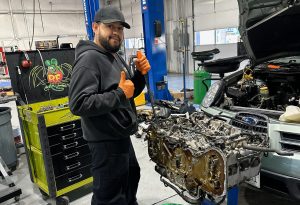

A cylinder head gasket service involves replacing the head gasket, which sits between the engine block and cylinder head to seal combustion chambers and prevent coolant and oil from mixing. This is a complex and labor-intensive repair that typically includes the following steps:
1. Diagnosis 🔍
- Confirming head gasket failure through tests (compression test, leak-down test, coolant contamination, or overheating symptoms).
2. Disassembly 🔧
- Draining engine fluids (coolant & oil).
- Removing components like the intake manifold, exhaust manifold, timing belt/chain, and valve cover.
- Carefully removing the cylinder head from the engine block.
3. Inspection & Preparation 🛠️
- Checking the cylinder head and engine block for warping or cracks (may require resurfacing or machining).
- Cleaning gasket surfaces thoroughly.
- Inspecting related components like head bolts, valves, and coolant passages.
4. Head Gasket Replacement 🏁
- Installing a new high-quality head gasket.
- Reassembling components with new seals, gaskets, and properly torqued head bolts (may require torque-to-yield bolts).
5. Reassembly & Testing ✅
- Refilling engine fluids.
- Checking timing and sensor connections.
- Running the engine to verify proper function and ensure no leaks.
- Performing a final inspection and road test.
Since a head gasket repair is a major job, it’s often recommended to inspect related components, like the water pump, timing components, and thermostat, to prevent future failures. Contact the experts at Scott’s Automotive & TIre Centers for any of your automotive concerns at www.scottsauto.com today! Our multiple locations in Arizona and Colorado can take care of your vehicle needs.