

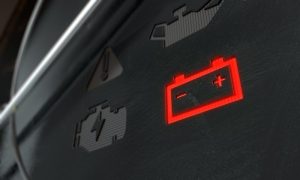
A car battery is one of the most important components of a car, as it provides the power to start the engine and keep it running. Given its vital role in a vehicle’s functioning, it is important to know when your car battery needs to be replaced. In this article, we will discuss the signs to look out for and how you can replace the battery yourself.
The Job of the Battery
The car battery provides the jolt of electricity necessary to power all the electrical components in your vehicle. Talk about a pretty huge responsibility. Without battery power, your car, as you’ve probably noticed, won’t start.
Let’s take a look at how that powerful little box works:
- A chemical reaction puts your car in action: Your battery converts chemical energy into the electrical energy necessary to power your car, delivering voltage to the starter.
- Keep the electric current steady: Not only does your battery provide the energy required to start your car, it’s also stabilizing the voltage (that’s the term for the energy supply) in order to keep your engine running. A lot’s riding on the battery. Call it the ‘little box that could.’
The car battery may be small, but the power it provides is huge.
Why Do Car Batteries Die?
Over the life of a battery, discharge-recharge reactions happen thousands of times. Each cycle wears out the plates a bit, and over time the lead deteriorates. As your car battery loses capacity, cold cranking amps decrease.
Deep discharging, which happens when you use the battery to run the stereo, lights or other electrical systems in your car when the engine is off, is responsible for a good portion of battery failures. Discharging most of your battery’s capacity by using it in this manner for too long and then recharging it through driving can cause the sulfur in the electrolyte solution to stick to the lead and create other damage to the plates in the battery.
Signs Your Car Battery Needs to be Replaced
- The engine is slow to start – If you notice that your engine is struggling to start or taking longer to start, it could potentially be a sign that your battery is losing its ability to hold a charge.
- Lights are dimming – If your headlights and interior lights are dimming and flickering, it may be a sign that your battery is not holding a charge. Also, if your dashboard lights are dimming while driving at night, that’s an indication of a bad battery.
- Random electrical issues – If you start noticing random electrical issues such as power seats not working or radio stations resetting, it could be an indication of a faulty battery.
- Check engine light – A weak battery can sometimes trigger the check engine light. This light typically means that something is wrong with the engine, powertrain, or emission control system.
Get Help with Scott’s Automotive
If you are looking for help with car battery, the team at Scott’s Automotive can provide expert advice and assistance. Our automotive technicians have been servicing cars since 1993, so you can trust that your vehicle is in good hands. Contact us today to learn more about our services!