

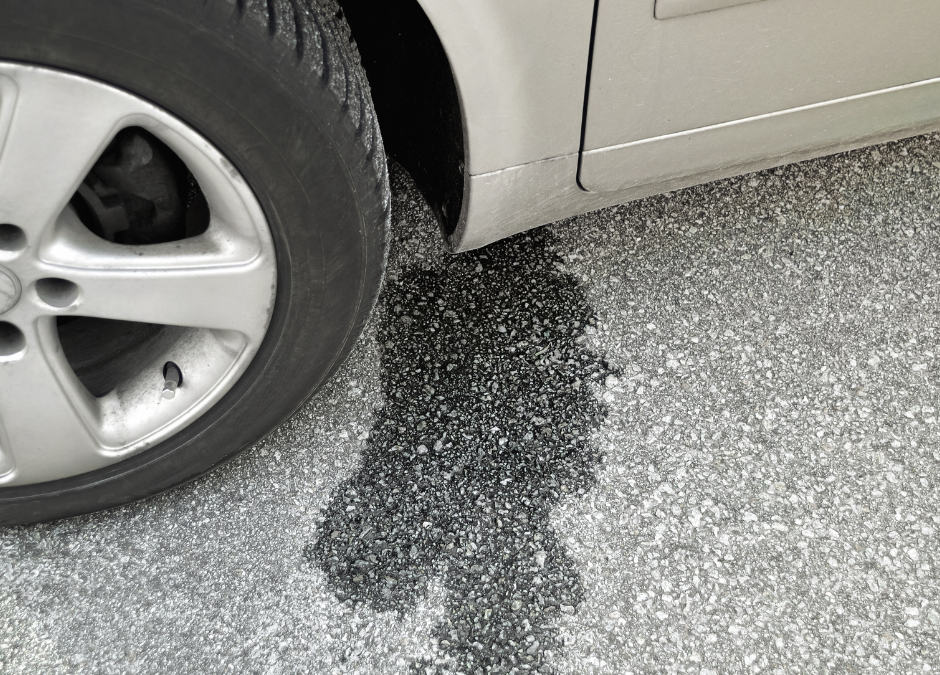
Does your vehicle seem to be losing something, but you can’t quite pinpoint what it is? If there’s a puddle of fluid underneath your car, identifying the source of the leak is key when it comes to regular automotive maintenance and ensuring that you save money in the long run. Knowing the different colors and viscosity of fluids such as antifreeze, oil, brake fluid and power steering fluid just might be the clue you need to determine what’s leaking from your vehicle. Here’s how to identify fluid leaks!
What Causes Oil to Leak?
Oil leaks, in most cases, are caused by wear and tear on your vehicle’s engine. This is usually the result of a combination of three factors: age, mileage and maintenance level. Heat from regular use can cause internal seals to break down over time, leading to oil loss. Paying attention to the color of the fluid will help you determine if the leak is from your engine oil, which tends to range in color from yellow-brown to black. It’s also usually thick and has a distinct smell.
What About Antifreeze?
Antifreeze, or coolant, can appear as either green or pink when it leaks out of your vehicle. In addition to providing protection from freezing temperatures, antifreeze also prevents corrosion and overheating. You should check the antifreeze level in your car on a regular basis during the winter months, as it can evaporate even when few issues are present.
What About Brake Fluid?
Brake fluid has a sweet smell and tends to be yellowish in color, but can sometimes look clear. This fluid should never leak out of your vehicle; if it does, you’ll want to get it repaired as soon as possible. Low levels of brake fluid can cause issues with the brakes, leading to longer stopping distances or even complete brake failure.
What About Power Steering Fluid?
Power steering fluid is usually red or amber in color. It’s important to check the level of power steering fluid on a regular basis, as low levels can cause damage to your vehicle’s power steering system. If you find that it’s leaking, take your car to a qualified mechanic as soon as possible. By understanding the different colors, textures and smells of automotive fluids, you can identify where a leak is coming from and get it fixed quickly.
What You Can Do at Home if You Notice a Leak
If you notice a fluid leak, it’s important to take action. If the leak is small and you’re able to identify what type of fluid is leaking from your vehicle, you can try topping off the levels yourself. However, if the leak appears to be from a major component or if it’s extensive, it’s best to take your vehicle to a qualified mechanic for repairs. If you don’t have access to a qualified mechanic or if the leak is isolated, it might be possible for you to replace parts yourself. Always remember that safety should come first – when in doubt, get it checked out!
Leak Prevention
The way to prevent leaks from happening in the first place is to keep up with regular maintenance. Changing the fluids when recommended and inspecting hoses, belts and other components for wear and tear can help you avoid costly repairs down the road. Additionally, if your car has been parked for an extended period of time or has been exposed to extreme temperatures, it’s a good idea to give the fluids one last check before you hit the road. By being aware of the various automotive fluid colors, textures and smells, and taking preventive measures like regular maintenance, you can stay ahead of any potential leaks and save yourself time and money in the future.
Get Your Fluid Leaks Checked by Scott’s Auto
At Scott’s Auto, we can diagnose and repair any fluid leaks quickly. Our team of qualified mechanics is highly experienced in automotive maintenance and repairs, so you can trust us to get the job done right. Contact us today to schedule an appointment – we look forward to helping you keep your vehicle running smoothly!